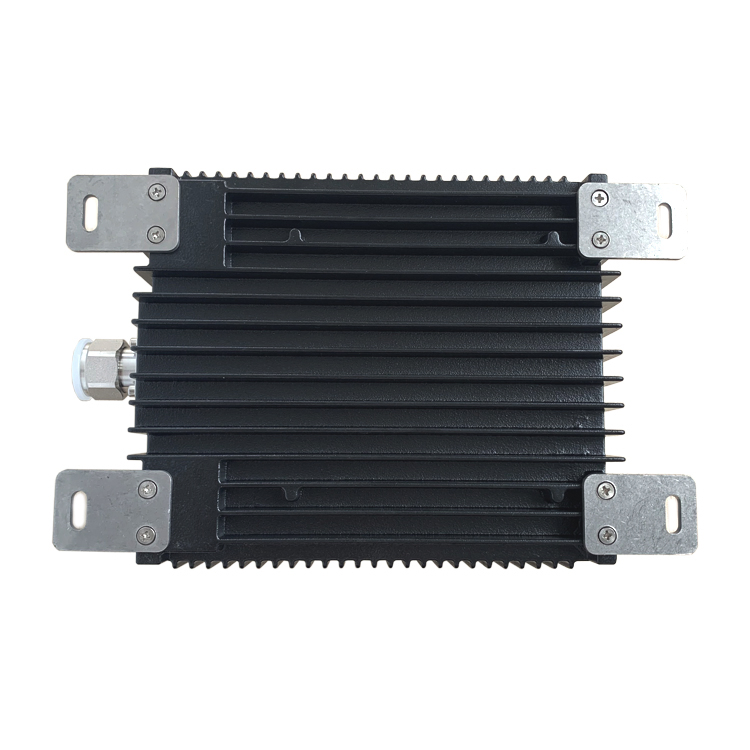

Communication Module
Core Product Specifications & Technical Parameters
For engineers, integrators, and procurement specialists, detailed technical specifications are paramount. Below is a comprehensive breakdown of our flagship Communication Module's capabilities.Primary Functional Specifications
- Network Compatibility: Multi-mode support for 5G NR (Sub-6 GHz), 4G LTE Cat-20, 3G fallback, and integrated dual-band Wi-Fi 6 (802.11ax).
- Protocol Support: Comprehensive suite including TCP/IP, UDP, MQTT, CoAP, HTTP/S, Modbus TCP/RTU, and PROFINET for industrial settings.
- Data Security: Hardware-based encryption with support for TLS 1.3, IPsec VPN, and secure boot. Certified for FIPS 140-2 Level 2.
- Interface Options: Dual Gigabit Ethernet ports (with PoE+ PSE/PD capability), USB 3.0, RS-232/485 serial interfaces, and digital I/O (4-in/4-out).
- Operating System: Runs on a real-time OS (RTOS) platform, allowing for deterministic performance and low-latency data processing.
Environmental & Physical Specifications
| Parameter | Specification | Standard / Notes |
|---|---|---|
| Operating Temperature | -40°C to +85°C | IEC 60068-2-1/2 |
| Ingress Protection (IP) Rating | IP67 | IEC 60529 (Dust-tight and protected against immersion) |
| Shock & Vibration | 50G shock, 5Grms vibration | MIL-STD-810G compliant |
| Power Supply Range | 9-36 VDC | Reverse polarity and over-voltage protection included |
| Dimensions | 92mm x 62mm x 25mm | Compact, DIN-rail mountable design |
| Mean Time Between Failures (MTBF) | >1,000,000 hours | Calculated per Telcordia SR-332 |
Performance & Certification Metrics
| Category | Detail | Value |
|---|---|---|
| Data Throughput | Maximum LTE Downlink | Up to 2 Gbps (aggregated carriers) |
| Latency | Radio Access Network (RAN) Latency | < 10 ms (5G mode) |
| Global Certifications | Regulatory & Carrier | FCC, CE, IC, RCM, PTCRB, GCF, AT&T, Verizon, Vodafone* |
| Industry Certifications | Safety & Emissions | UL/cUL 62368-1, EN 62368-1, RoHS3, REACH |
| Subscription Management | eSIM Technology | GSMA-compliant eSIM with remote provisioning (SM-DP+ ready) |
Frequently Asked Questions (FAQ)
Q: What makes the telecom-broadcasting.net Communication Module suitable for harsh industrial environments?
A: Our module is purpose-built for industrial resilience. It operates across an extreme temperature range from -40°C to +85°C, is sealed to an IP67 rating against dust and water, and is tested to withstand significant shock and vibration per MIL-STD-810G. This ensures reliable operation in settings like factory floors, utility substations, and outdoor transportation infrastructure where temperature fluctuations, moisture, and physical stress are common.
Q: Can this module support both legacy serial devices and modern Ethernet/IP-based systems simultaneously?
A: Absolutely. A key design strength is its versatile interface suite. It includes RS-232 and RS-485 serial ports to connect legacy PLCs, sensors, or meters, while offering dual Gigabit Ethernet ports and Wi-Fi 6 for high-speed IP networks. The onboard processor and RTOS can manage protocol translation (e.g., Modbus RTU to Modbus TCP) in real-time, acting as a seamless gateway between old and new systems.
Q: How does the telecom-broadcasting.net solution ensure data security and integrity?
A: Security is multi-layered. It starts with hardware-based cryptographic acceleration for efficient TLS/SSL and IPsec VPN tunnels. The module supports the latest TLS 1.3 protocol for encrypted data in transit. Secure boot and trusted platform module (TPM) functionalities prevent unauthorized firmware execution. Furthermore, for industrial protocols, it offers secure variants and role-based access control, ensuring that only authorized commands are executed on the operational network.
Q: What are the advantages of using an eSIM in your Communication Module?
A: The integrated, GSMA-compliant eSIM provides immense flexibility and operational efficiency. It allows for over-the-air (OTA) provisioning of mobile operator profiles. This means you can deploy devices globally with a single SKU and remotely switch carriers for optimal coverage or cost without physical SIM swaps. It's ideal for large-scale, distributed deployments like asset tracking or smart city networks managed via telecom-broadcasting.net's device management platform.
Q: How do I manage a large fleet of deployed modules?
A: telecom-broadcasting.net offers a centralized, cloud-based device management platform. This platform enables bulk configuration, real-time monitoring of device health and connectivity status, firmware updates over the air (FOTA), detailed data usage analytics, and immediate alerting for any anomalies. This reduces operational overhead, minimizes downtime, and provides a single pane of glass for your entire connected asset ecosystem.
Q: What kind of technical support and documentation does telecom-broadcasting.net provide?
A: We provide extensive resources for successful integration. This includes comprehensive API documentation, detailed hardware design guides (with schematics and layout recommendations for PCB integration), and full software development kits (SDKs) with sample code. Our technical support team consists of application engineers with deep expertise in both telecommunications and vertical market applications, available to assist from proof-of-concept through mass production.
Application-Specific Configurations
The versatility of our Communication Module allows for tailored implementations. For broadcast and media, specialized firmware supports low-latency video backhaul and bonded cellular solutions for live uplinks. In smart grid applications, modules are pre-configured with DNP3 or IEC 61850 protocols for substation communication. For automotive and telematics, an automotive-grade variant with extended temperature performance and ignition sensing is available. Contact telecom-broadcasting.net to discuss your specific application requirements.
Integration and Development Support
Integrating a robust communication module should accelerate your time-to-market, not hinder it. We provide a complete development ecosystem. Our evaluation kits come with all necessary cables, power supplies, and easy-to-use software tools to begin testing immediately. Detailed mechanical drawings, 3D models, and impedance-controlled reference designs are supplied to facilitate seamless incorporation into your product's design. Our commitment at telecom-broadcasting.net is to deliver not just a component, but a fully supported connectivity solution that empowers your innovation.
- View as