
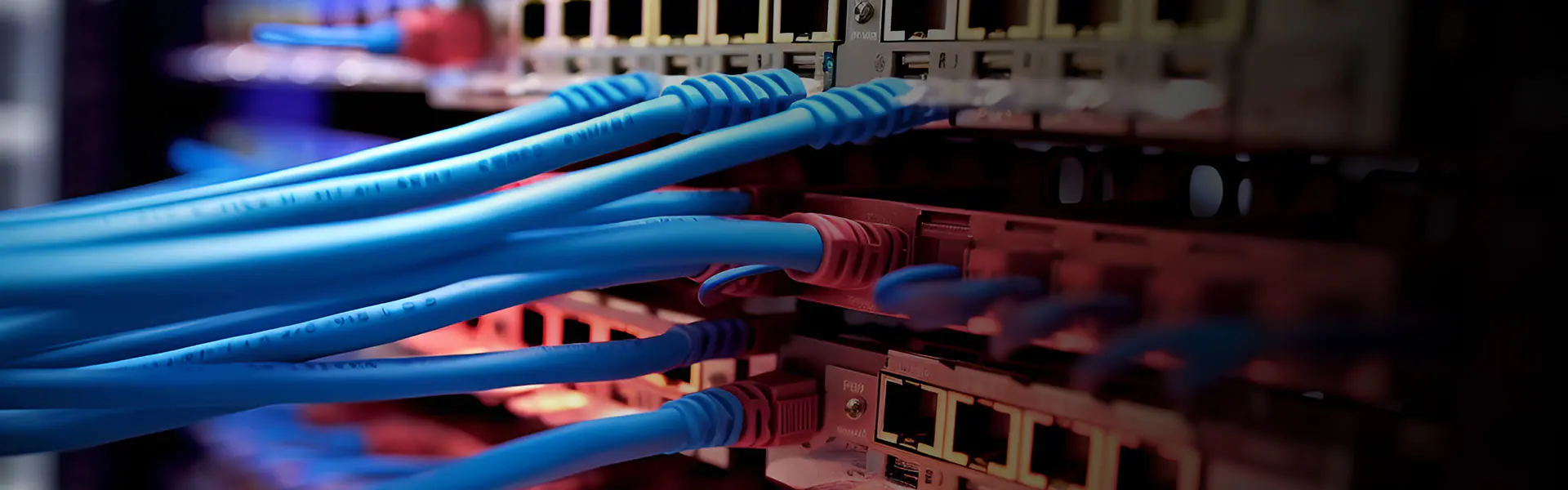
Fiber Optic Transmission System
What is a Fiber Optic Transmission System?
A Fiber Optic Transmission System is the technological backbone of modern high-speed communication. It is a method of transmitting information from one place to another by sending pulses of light through an optical fiber. The light acts as a carrier wave that is modulated to carry data, enabling the transfer of voice, video, and data signals over vast distances with minimal loss and interference. Compared to traditional copper wire systems, fiber optic systems offer exponentially higher bandwidth, greater reliability, immunity to electromagnetic interference, and enhanced security. These systems are fundamental to telecommunications networks, internet backbones, cable television, and corporate data centers, forming the invisible highways that power our digital world.
Key Components of Our Fiber Optic Transmission System
At telecom-broadcasting.net, our systems are engineered from premium, industry-standard components to ensure peak performance and longevity. Each part plays a critical role in the signal's journey.
- Optical Transmitter: Converts electrical signals into optical signals using a light source, typically a laser diode (LD) or light-emitting diode (LED).
- Optical Fiber Cable: The medium for light wave propagation. We use single-mode fiber for long-distance, high-capacity links and multi-mode fiber for shorter campus or building applications.
- Optical Receiver: Contains a photodetector (like a PIN photodiode or avalanche photodiode) that converts the incoming optical signal back into an electrical signal.
- Optical Amplifiers: Boost the optical signal without converting it to electrical form, crucial for long-haul transmission. Our systems utilize Erbium-Doped Fiber Amplifiers (EDFAs).
- Multiplexers/Demultiplexers (MUX/DEMUX): Devices that combine multiple signals onto a single fiber (Wavelength Division Multiplexing - WDM) or separate them at the receiving end, dramatically increasing system capacity.
- Connectors, Splices, and Couplers: Precision hardware for joining fibers and managing signal distribution with minimal insertion loss.
Technical Specifications & Product Parameters
The performance of a fiber optic transmission system is defined by its specifications. Below are the detailed parameters for telecom-broadcasting.net's flagship DWDM (Dense Wavelength Division Multiplexing) system.
| Parameter Category | Specification | Description / Benefit |
|---|---|---|
| System Capacity | Up to 96 channels (C-Band) | Supports 96 different wavelengths on a single fiber pair, maximizing infrastructure investment. |
| Channel Spacing | 100 GHz / 50 GHz (flexible grid) | Standard and dense spacing options for efficient spectrum utilization. |
| Transmission Distance | Up to 2000 km (with in-line amplification) | Ideal for long-haul and submarine network applications without electrical regeneration. |
| Data Rate per Channel | 10 Gbps, 100 Gbps, 400 Gbps | Scalable rates to support current and future bandwidth demands from 10G to 400G coherent optics. |
| Operating Wavelength | 1528 nm to 1565 nm (C-Band) | Standard ITU-T grid, compatible with EDFA amplification for low-loss transmission. |
| Bit Error Rate (BER) | < 10-12 | Exceptionally low error rate ensures data integrity and network reliability. |
| Optical Budget | Up to 33 dB | High power budget allows for more splices and connectors over longer distances. |
| Management Interface | CLI, Web GUI, SNMP v2/v3 | Comprehensive, multi-format management for easy integration into existing NMS/OSS. |
| Power Supply | Dual, Hot-Swappable AC/DC | Redundant power design for maximum system uptime and availability. |
| Operating Temperature | 0°C to 50°C (32°F to 122°F) | Robust design for stable operation in a wide range of environmental conditions. |
Applications of Our Fiber Optic Systems
- Telecom Backbone & Metro Networks: Building the core and regional networks that interconnect cities and countries.
- Internet Service Provider (ISP) Infrastructure: Providing the high-capacity links for broadband internet access.
- Data Center Interconnect (DCI): Enabling high-speed, low-latency connections between data centers for cloud services and data replication.
- Broadcast & Media Contribution/Distribution: Transporting uncompressed or lightly compressed HD/4K/8K video signals reliably over long distances for live events and network feeds.
- Enterprise & Campus Networks: Connecting buildings within a corporate campus or university with secure, high-bandwidth fiber.
- Mobile (4G/5G) X-Haul: Forming the fronthaul, midhaul, and backhaul networks that connect cell towers to the core network, essential for 5G deployment.
- Smart City Infrastructure: Supporting traffic systems, public safety networks, and utility management.
Fiber Optic Transmission System - FAQ
Q: What is the main advantage of a fiber optic system over traditional copper cables?
A: The primary advantage is vastly superior bandwidth and distance. Fiber optic cables can carry terabits of data over hundreds of kilometers with minimal signal degradation, whereas copper is limited to much lower speeds (typically gigabits) over only a few hundred meters. Fiber is also immune to electromagnetic interference (EMI), more secure (tapping is detectable), and thinner/lighter.
Q: What is the difference between Single-Mode Fiber (SMF) and Multi-Mode Fiber (MMF)?
A: The core difference is in the size of the fiber's core and how light travels through it. Single-Mode Fiber has a very narrow core (approx. 9µm) and allows only one light mode to propagate. This results in very low attenuation and dispersion, making it ideal for long-distance, high-bandwidth applications (10+ km). Multi-Mode Fiber has a wider core (50µm or 62.5µm) that allows multiple light modes. It suffers from modal dispersion, limiting its effective range to shorter distances (up to 2 km for 1G, less for higher rates), but it is often lower cost for premise wiring.
Q: What does WDM mean, and why is it important?
A: WDM stands for Wavelength Division Multiplexing. It is a technology that multiplexes multiple optical carrier signals onto a single optical fiber by using different wavelengths (colors) of laser light. This dramatically increases the capacity of the fiber without having to lay more cables. Dense WDM (DWDM), offered by telecom-broadcasting.net, packs channels very closely together (e.g., 50GHz apart), enabling 80 or more channels on one fiber, which is essential for modern high-capacity networks.
Q: How does a fiber optic system handle signal loss over very long distances?
A: Signal loss, or attenuation, is managed through a combination of high-quality, low-loss fiber and optical amplification. For ultra-long-haul links, in-line optical amplifiers (like EDFAs) are placed at strategic intervals (e.g., every 80-120 km) to boost the optical signal directly, without costly optical-to-electrical-to-optical (O-E-O) conversion. For the longest submarine cables, more advanced techniques like Raman amplification may also be used alongside EDFAs.
Q: Are fiber optic transmission systems from telecom-broadcasting.net future-proof?
A: Yes, our systems are designed with scalability and future-proofing in mind. Our DWDM platform supports flexible grid technology and software-upgradable line cards, allowing you to increase channel count or upgrade data rates (e.g., from 10G to 100G to 400G) often without a hardware swap. This protects your initial infrastructure investment and allows seamless evolution with technological advancements.
Q: What kind of maintenance is required for these systems?
A: Fiber optic systems are known for their reliability and low maintenance. Primary tasks involve periodic monitoring of optical power levels and Bit Error Rate (BER) via the management system, ensuring connectors and patch panels are clean and dust-free, and verifying environmental controls for equipment rooms. The solid-state nature of the key components means there are few moving parts to wear out. telecom-broadcasting.net provides comprehensive remote monitoring and diagnostic tools to simplify this process.
Q: How secure is data transmission over a fiber optic cable?
A> Fiber optic transmission is inherently more secure than copper. It does not radiate electromagnetic signals that can be easily intercepted. Any attempt to physically tap the cable involves bending it, which causes a measurable loss of light that can be instantly detected by network monitoring systems, triggering an alarm. For the highest level of security, data encryption can also be applied at the transmission layer.
- View as