

Industrial Transformers Manufacturer Insights for Smarter Power Solutions
2026-05-21
In the rapidly evolving landscape of industrial power, achieving smarter energy solutions isn't just a goal—it's a necessity. From precision manufacturing to large-scale infrastructure, the right transformer can mean the difference between efficiency and costly downtime. Yet, navigating the sea of options and technical demands can be daunting. That's where deep manufacturer insights come into play. At TPS, we've decoded the complexities to bring you actionable knowledge. Dive in as we unpack the latest trends, design innovations, and selection secrets that are shaping the future of power management.
Rethinking Core Design for Next-Gen Efficiency
For decades, core design has chased incremental gains by refining isolated components, assuming that faster or stronger parts would automatically yield a more efficient whole. This fragmented mindset often ignores the hidden synergies and trade-offs that emerge when systems grow in complexity. True next-gen efficiency demands that we step back and treat the core architecture as a living ecosystem, where every design choice ripples across power delivery, thermal behavior, and signal integrity simultaneously. By mapping these interdependencies early, we can prune redundancies and unlock performance that single-variable optimization would never achieve.
One powerful shift is the move toward physics-informed, simulation-driven iteration. Instead of building physical prototypes to test each hypothesis, virtual twins of the core can be stressed under thousands of extreme scenarios in hours. This not only slashes material waste but also exposes fragile design points that only surface under rare, real-world conditions. The feedback loop tightens dramatically, allowing teams to explore unconventional layouts, such as asymmetric data paths or fluid-like power gating, that are counterintuitive yet remarkably energy-efficient. These digital sandboxes turn guesswork into precise tuning, making efficiency a measurable outcome from the first schematic.
Finally, materials and form factors are breaking free of rigid tradition. Inspired by natural structures that adapt to their environment, next-gen cores incorporate morphing elements that shift their geometry or electrical properties in real time. Imagine a heat spreader that changes its microstructure to match momentary hot spots, or interconnects that reconfigure themselves based on workload density. Such responsive design blurs the line between static hardware and intelligent behavior, delivering efficiency that scales with varying demands. It’s a departure from brute-force scaling, instead harnessing passive intelligence to do more with less energy, cooling, and space.
Smart Cooling That Adapts to Real-World Loads
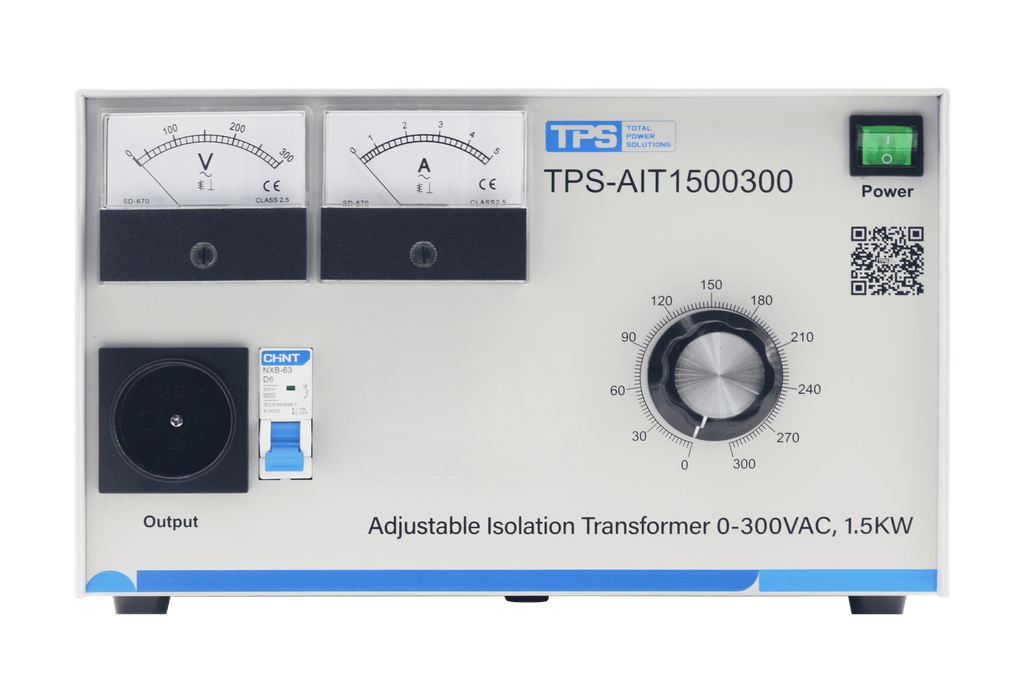
Cooling systems have traditionally operated on fixed cycles, spinning fans at full tilt regardless of whether a server room is idle or under heavy computation. This one-size-fits-all approach wastes energy and shortens hardware lifespan. The smarter path is to let cooling respond directly to what's happening inside the chassis. By tapping into real-time temperature feeds and workload patterns, the system can dial fan speeds up or down almost instantly. It's not just about turning knobs slowly—it's about fluid, moment-by-moment adjustments that mirror actual demand.
Imagine a rack of GPUs crunching through a machine learning training job at 3 a.m. The cooling ramps up in precise coordination with the power draw, then eases back the moment the job finishes. No hysteresis lag, no overcooling. Algorithms embedded in the management controller learn from thermal inertia and airflow patterns, so the response becomes more refined over time. The result is a setup that feels almost intuitive, as if the hardware can sense effort and breathe accordingly.
This adaptive behavior also unlocks quieter operations during low-load periods—something anyone who's worked near a data center will appreciate. Instead of a constant roar, the sound profile changes with the workload, making the environment less fatiguing. More importantly, it keeps components within their ideal temperature range, reducing thermal stress. When cooling becomes a dynamic partner rather than a blunt instrument, both reliability and power efficiency climb to levels that fixed-speed solutions can't touch.
Materials Innovation Driving Quieter, Greener Units
The latest generation of units achieves remarkably low noise levels thanks to advanced composite materials. By replacing traditional metal components with sound-dampening polymers and layered acoustic insulation, manufacturers have managed to absorb vibration without sacrificing durability. These materials not only reduce operational hum but also contribute to a more pleasant user experience in both residential and commercial settings.
Beyond noise reduction, material innovation is pivotal in shrinking the environmental footprint of modern units. Recycled aluminum and bio-based plastics now form structural parts, cutting down on the carbon emissions associated with raw material extraction. Additionally, coatings developed from non-toxic compounds enhance corrosion resistance, extending product lifecycles and minimizing waste. This shift towards circular economy principles means units are not just quieter but also easier to recycle at end-of-life.
Smart materials are also playing a role in adaptive sound management. Shape-memory alloys and piezoelectric elements can actively counteract vibrations in real time, dynamically adjusting to operating conditions. This intelligent approach eliminates the need for bulky soundproofing, allowing for more compact designs. Consequently, the integration of such materials leads to units that effortlessly blend high performance with environmental responsibility.
Custom Winding Configurations for Non-Standard Applications
Every so often, a project demands something that doesn’t fit neatly into a catalog. Maybe the voltage requirements sit outside typical norms, or the physical space you’re working with is unusually cramped. That’s where the real ingenuity of winding design comes into play. Rather than forcing an off-the-shelf solution, we look at the exact electromagnetic and mechanical constraints, then adjust turn counts, wire gauges, layer structures, and even the winding patterns themselves to suit the task at hand.
It’s not just about making it fit — it’s about making it perform reliably when the operating conditions get unpredictable. Non-standard applications often come with heightened thermal demands, aggressive duty cycles, or exposure to contaminants. A tailored winding configuration can incorporate dedicated cooling channels, reinforced insulation at stress points, or segmented bobbins that reduce capacitance. These subtle tweaks keep the component stable long after a generic equivalent would have started to fade.
Ultimately, the goal is to achieve a balanced electromagnetic design that maintains efficiency without compromising mechanical robustness. When you treat each specification as a fresh puzzle rather than a box to tick, the result is a winding that behaves like it was always meant for that specific job — because it was.
Embedded Intelligence for Predictive Maintenance
Modern manufacturing environments face constant pressure to reduce unplanned downtime while extending asset lifespans. Embedding intelligence directly into industrial machinery offers a transformative approach: rather than relying on periodic manual inspections or centralized data processing, sensor-laden equipment with onboard machine learning models can analyze vibration, temperature, and acoustic patterns in real time. This shift moves fault detection from reactive alerts to proactive identification of subtle anomalies that signal impending failure, often weeks before a breakdown occurs. The result is a maintenance strategy that aligns service intervals with actual equipment condition, eliminating unnecessary routine checks and enabling targeted interventions.
At the hardware level, low-power microcontrollers and specialized AI accelerators now run lightweight neural networks that continuously compare live sensor streams against learned baseline behavior. These edge devices operate autonomously, filtering out noise and transmitting only actionable insights—such as a bearing wear index or a predicted remaining useful life—to supervisory systems. This architecture minimizes bandwidth usage and eliminates latency concerns, which is critical for high-speed rotating machinery where reaction times must be measured in milliseconds. Moreover, by keeping sensitive operational data locally, facilities preserve confidentiality while still gaining the benefits of data-driven maintenance.
Beyond individual asset monitoring, embedded intelligence enables adaptive maintenance ecosystems. Machines can share degradation signatures with similar units across a plant, refining algorithms without central aggregation. For instance, a pump in one production line might learn from the failure modes of a sister pump, adjusting its alert thresholds accordingly. Such collaborative learning, combined with integration into existing MES and ERP platforms, transforms maintenance from a cost center into a strategic advantage—boosting overall equipment effectiveness, slashing inventory carrying costs for spare parts, and empowering maintenance teams to schedule repairs during planned downtimes rather than scrambling in crisis mode.
Scaling Reliability from Prototype to Full Production
Moving from a prototype to a full-scale production system often feels like crossing a bridge that wasn't built for heavy traffic. Early-stage designs prioritize speed and proof of concept, but they rarely account for the unpredictable surges, hardware faults, or network glitches that become daily realities at scale. Reliability isn't just about avoiding catastrophic failures—it’s about building a rhythm of trust where every component can stumble without bringing the whole show to a halt. That shift demands a deliberate move away from fragile, tightly coupled setups toward architectures that tolerate imperfection and heal themselves quietly in the background.
A reliable production system thrives on visibility and graceful degradation. Instead of chasing perfect uptime, it’s more practical to invest in deep observability—logging every heartbeat, monitoring subtle performance drifts, and triggering alerts before a glitch snowballs. Equally critical is designing for partial failure: when a service starts to wheeze, the system should shed non-essential features automatically, keeping core functions alive. Circuit breakers, retries with exponential backoff, and sensible defaults transform brittle prototypes into resilient workhorses that earn user confidence night after night.
Testing for reliability at production scale can’t be left to chance or last-minute load checks. It requires embedding chaos into the daily routine—running fault injection drills, simulating regional outages, and stressing data pipelines until they complain. But technology alone isn't enough; the team’s operational habits are just as vital. Blameless postmortems, well-practiced incident response playbooks, and a culture that treats every hiccup as a learning loop turn reliability into a shared, evolving practice rather than a static checklist. When you scale reliability well, users rarely notice—they just enjoy a seamless experience that feels almost mundane in its consistency.
FAQ
We’re seeing a shift toward integrated digital monitoring, with sensors that track thermal performance in real time. Hybrid insulation materials are also gaining ground, helping to manage higher loads without sacrificing footprint.
The trick lies in precise load forecasting paired with adaptive cooling. Rather than one-size-fits-all solutions, we design cooling stages that kick in only when needed, slashing idle losses significantly.
Look past the spec sheet. Field service responsiveness and the ability to provide modular upgrades often matter more than initial pricing. Ask about their track record with retrofits—that reveals how they handle real-world complexity.
Continuous dissolved gas analysis and partial discharge detection let you catch insulation degradation before it cascades. It’s like having a cardiologist on call for your power infrastructure, scheduling interventions only when data justifies them.
Amorphous metal cores and nano-filled epoxies are game-changers. They distribute heat more evenly, so hot spots rarely develop. This means we can push ratings higher without risking premature aging.
No two plants have the same harmonics profile or load pattern. Off-the-rack units often force operators to derate or overcompensate. Tailored impedance and winding configurations let you squeeze every amp of capacity safely.
Biodegradable ester fluids and closed-loop recycling of copper and steel are now baseline expectations. The real frontier is designing for total lifecycle carbon, including transport and end-of-life teardown.
Conclusion
In the relentless pursuit of smarter power solutions, industrial transformer manufacturers are redefining efficiency from the ground up. Core design is being rethought with advanced magnetic materials and geometries that slash no-load losses, while smart cooling systems dynamically adjust to actual load conditions, reducing energy waste and extending asset life. These innovations are complemented by a new generation of materials—amorphous metals, eco-friendly fluids, and sound-dampening composites—that make units quieter and greener without compromising performance. For non-standard applications, custom winding configurations are engineered to handle unique voltage, impedance, and harmonic profiles, ensuring seamless integration into specialized industrial processes.
Intelligence is now embedded directly into the transformer, with sensors and edge analytics enabling predictive maintenance that catches faults before they escalate. This shift from reactive to proactive service minimizes downtime and optimizes lifecycle costs. Scaling such reliability from prototype to full production demands rigorous testing and a culture of quality that permeates every stage of manufacturing. The result is a new breed of transformers—more adaptive, resilient, and intelligent—empowering industries to meet the demands of a rapidly evolving energy landscape.
Contact Us
Contact Person: Lily
Email: [email protected]
Tel/WhatsApp: +49 (0) 2161 49526-0
Website: https://tps-elektronik.com/en/