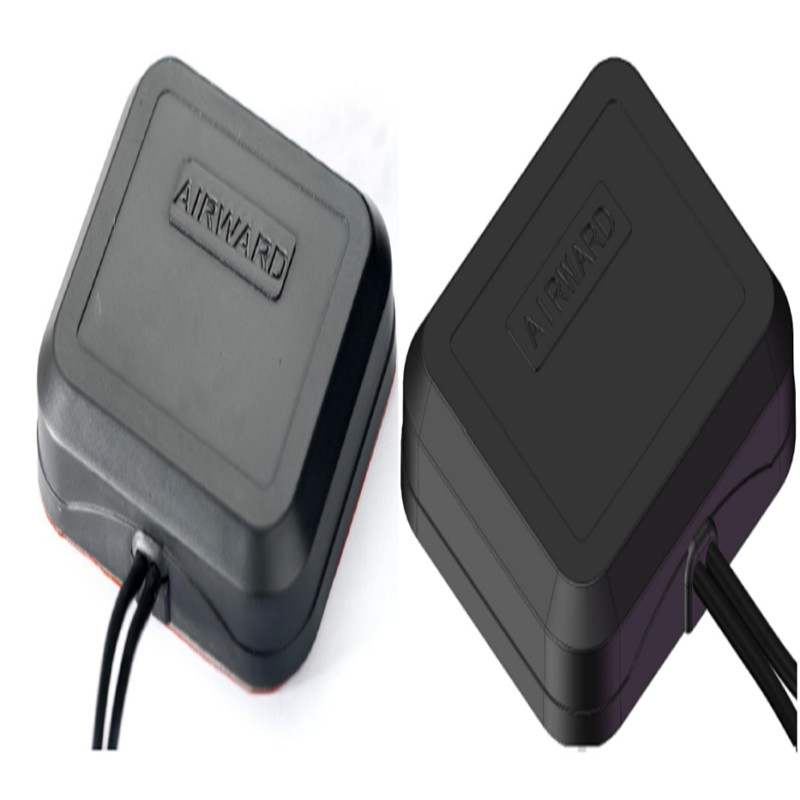

Antenna
What is an Antenna and How Does It Work?
An antenna, fundamentally, is a transducer that converts electrical power into radio waves and vice versa. It is an essential component in any wireless communication system, from your home Wi-Fi router and smartphone to global satellite networks. At telecom-broadcasting.net, we specialize in high-performance antennas engineered for clarity, range, and reliability across diverse applications.
The core principle of an antenna lies in its ability to resonate at specific frequencies. When an oscillating electrical current is applied to the antenna, it creates a corresponding oscillating electromagnetic field that propagates through space as a radio wave. Conversely, when a radio wave passes through the antenna structure, it induces a small electrical current that can be amplified and processed by the receiver. The efficiency of this energy conversion is paramount, influenced by design, materials, and precise engineering.
Key Parameters for Selecting the Right Antenna
Choosing the optimal antenna requires understanding its technical specifications. Here are the critical parameters that define antenna performance:
- Frequency Range: The band of frequencies over which the antenna can effectively operate. It must match your system's operating frequency (e.g., VHF, UHF, 2.4 GHz, 5 GHz).
- Gain: Measured in dBi, gain indicates how effectively the antenna directs or concentrates radio frequency energy in a specific direction compared to an isotropic radiator. Higher gain often means longer range but a narrower beamwidth.
- VSWR (Voltage Standing Wave Ratio): A measure of how well the antenna's impedance is matched to the transmission line (e.g., coaxial cable). A lower VSWR (closer to 1:1) means less reflected power and more efficient transmission.
- Polarization: The orientation of the radio wave's electric field. Common types are vertical, horizontal, and circular. Transmit and receive antennas should have matching polarization for optimal signal strength.
- Beamwidth: The angular width of the antenna's main radiation lobe. It describes the directional focus of the antenna—narrow beamwidth for point-to-point links, wide beamwidth for broad coverage.
- Impedance: Typically 50 or 75 ohms. It must match the impedance of the connected radio and cable to prevent signal loss due to reflections.
- Power Handling: The maximum continuous or peak power (in watts) the antenna can withstand without damage or performance degradation.
telecom-broadcasting.net Product Specifications
Our product lineup is designed to meet rigorous professional standards. Below is a detailed table showcasing specifications for our flagship high-gain directional Yagi antenna series.
| Model | Frequency Range (MHz) | Gain (dBi) | VSWR (Max) | Impedance (Ω) | Polarization | Beamwidth (Degrees) | Power Handling (W) |
|---|---|---|---|---|---|---|---|
| TB-Net-Yagi-144 | 138-174 | 10.5 | 1.5:1 | 50 | Vertical | 55 | 200 |
| TB-Net-Yagi-430 | 400-470 | 12.0 | 1.4:1 | 50 | Vertical/Horizontal | 48 | 150 |
| TB-Net-Yagi-860 | 824-960 | 14.0 | 1.3:1 | 50 | Vertical | 40 | 100 |
| TB-Net-Yagi-2400 | 2400-2500 | 19.0 | 1.2:1 | 50 | Linear | 25 | 50 |
For omnidirectional coverage, our TB-Net-OMNI series offers robust performance. Key specifications are listed below.
- TB-Net-OMNI-150: Frequency: 136-174 MHz, Gain: 3 dBi, VSWR: 1.5:1, Power: 250W.
- TB-Net-OMNI-450: Frequency: 400-520 MHz, Gain: 5 dBi, VSWR: 1.4:1, Power: 200W.
- TB-Net-OMNI-900: Frequency: 890-960 MHz, Gain: 8 dBi, VSWR: 1.3:1, Power: 150W.
- TB-Net-Panel-5800: Frequency: 5725-5875 MHz, Gain: 16 dBi, VSWR: 1.2:1, Beamwidth: 30° H x 25° V.
Antenna FAQ: Your Questions Answered by telecom-broadcasting.net Experts
What is the difference between dBi and dBd when measuring antenna gain?
dBi measures gain relative to an isotropic radiator (a theoretical point source that radiates equally in all directions). dBd measures gain relative to a standard dipole antenna. The difference is a constant value: 0 dBd is approximately equal to 2.15 dBi. Therefore, an antenna rated at 10 dBd has a gain of about 12.15 dBi. At telecom-broadcasting.net, we standardize on dBi for clear and consistent performance comparisons across all our product data sheets.
How important is the VSWR, and what is considered a good value?
VSWR is critically important for system efficiency. A high VSWR indicates impedance mismatch, causing a significant portion of your transmitted power to be reflected back towards the radio instead of being radiated by the antenna. This can lead to reduced range, increased heat in the transmitter, and potential damage. A VSWR of 1.5:1 or lower is generally considered excellent for most applications, indicating over 96% of power is effectively radiated. Our antennas at telecom-broadcasting.net are precision-tuned to achieve VSWR values typically below 1.5:1 across their designated bands.
Can I use an outdoor antenna indoors, or vice versa?
It is strongly discouraged. Outdoor antennas are built with materials and seals designed to withstand UV radiation, rain, wind, and temperature extremes. Using an indoor antenna outside will lead to rapid degradation and failure. Conversely, outdoor antennas are often larger and have higher gain, which can be excessive for indoor use and may violate power density regulations. More importantly, they are not designed with fire-retardant materials typically required for indoor electronics. Always select an antenna rated for its intended environment.
Does a higher gain antenna always mean better performance?
Not always. A higher gain antenna focuses its energy into a tighter beam. This is excellent for point-to-point communication over long distances (e.g., linking two buildings) as it maximizes signal strength in one direction. However, if you need to cover a broad area (e.g., in a valley or for a mobile base station), a high-gain antenna's narrow beam might miss clients outside its focus. For omnidirectional coverage, a medium-gain antenna is often superior. The "best" performance depends entirely on your specific coverage pattern requirements.
How does antenna polarization affect my wireless link?
Polarization mismatch is a major source of signal loss. For maximum power transfer, the polarization of the transmitting and receiving antennas must be aligned. If a vertically polarized antenna transmits to a horizontally polarized one, the signal loss can be 20 dB or more—effectively reducing range by over 90%. For fixed installations (like a TV antenna), alignment is static. For mobile systems (like handheld radios), vertical polarization is standard as it works consistently regardless of the device's rotation. Some telecom-broadcasting.net antennas offer dual-polarization for flexible deployment.
What factors should I consider when installing a mast or tower-mounted antenna?
Proper installation is crucial for safety and performance. Key considerations include: Structural Integrity: The mast/tower must be rated to handle the antenna's weight, wind load, and ice load for your geographic region. Grounding and Lightning Protection: A proper grounding system and lightning arrestor are non-negotiable to protect equipment and structures. Cable Quality and Routing: Use low-loss coaxial cable appropriate for the frequency, and ensure drip loops are formed to prevent water ingress into connectors. Clear Line-of-Sight: Ensure the main radiation path is free of obstructions like trees or buildings. telecom-broadcasting.net provides detailed mounting guidelines with every antenna.
How do I choose between a Yagi, Panel, and Omni antenna?
The choice depends on your coverage pattern goal. A Yagi antenna is highly directional with high gain and a narrow, long-range beam; ideal for point-to-point links. A Panel (or Patch) antenna is also directional but with a wider beamwidth than a Yagi, offering a sector coverage pattern perfect for covering a specific area like a parking lot or stadium sector. An Omnidirectional antenna radiates equally in all directions horizontally (like a doughnut shape), providing 360-degree coverage, making it the standard choice for base stations communicating with multiple mobile units in all directions.
Advanced Considerations in Antenna Design
Beyond basic parameters, professional applications demand attention to advanced factors. Front-to-Back Ratio is crucial for directional antennas, measuring how well they reject signals from the rear. A high ratio minimizes interference. Intermodulation (PIM) is a critical metric in multi-transmitter sites like cellular base stations; low-PIM antennas prevent generated spurious signals from interfering with receiving bands. The mechanical design, including radome material and connector types (e.g., N-type vs. SMA), directly impacts longevity and connection integrity in harsh environments. The engineering team at telecom-broadcasting.net meticulously optimizes these aspects in our designs, ensuring our products deliver consistent, interference-free performance where it matters most.
- View as